
Nekoč so po ulicah odmevali pogovori, trgovine so bile polne kupcev, na železniški postaji so ustavljali vlaki, ob nedeljah pa sta se polnili kar dve cerkvi. Danes v kanadskem Solsgirthu vlada skoraj popolna tišina. Nekdanje živahno kmetijsko naselje v provinci Manitoba je postalo mesto duhov, v katerem živijo le še tri družine. Medtem ko so prebivalci drug za drugim odhajali, so za njimi ostajali hiše, pohištvo, osebni predmeti in celo cerkev, ki so jo nazadnje prodali za simboličen en kanadski dolar oziroma nekaj več kot pol evra.

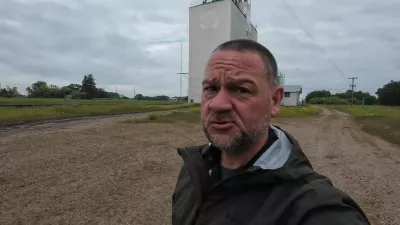
Eden redkih prebivalcev je Garry Workman, ki se je v Solsgirth vrnil leta 1962, po očetovi smrti, in se posvetil kmetovanju. Takrat je bilo naselje še precej živahnejše, a so se v naslednjih desetletjih ljudje začeli postopoma odseljevati. Danes je njegova družina ena od treh, ki še vztrajajo v kraju.
Story from Jam Press (Eerie Ghost Town)Pictured: Video Grab: Dave Conlon exploring the abandoned buildings.GALLERY: Inside eerie 'ghost town' where just THREE families remain and church was sold at 50pEerie pictures reveal a near-abandoned ghost town with desolate churches and empty homes littered with once-prized belongings.The haunting images show deserted houses, overgrown gardens and a church where a calendar remains stuck on September 2002.Photographer Dave Conlon, known online as Freaktography, captured the forgotten settlement of Solsgirth in Manitoba, Canada.The village was once a thriving farming community, boasting shops, a railway station, grain elevators and two churches.But its population gradually dwindled as residents moved away, with just three households reportedly remaining in 2021.Remarkably, Solsgirth was originally located around six miles north of its present position.Known as Toddburn, the settlement relocated after the railway changed its planned route."The whole town picked up and followed it," Dave told Jam Press.Among its most striking surviving buildings are St Stephen's Anglican Church, built in 1906, and Holy Ghost Ukrainian Catholic Church, which was converted from a former schoolhouse.The latter's distinctive domes were handcrafted by Michael "Mike" Swistun, a local carpenter who once performed as the world's strongest man with a circus.Both churches held their final services in 2002, just four months apart."For 50 years, two faiths worshipped a stone's throw apart," Dave said.St Stephen's was subsequently sold to a regional museum for just one Canadian dollar, although plans to relocate the building never materialised.Its wooden pews, pulpit and religious books can still be seen inside.The photographs offer a fascinating glimpse into a once-bustling community that has almost vanished from the Canadian countryside.ENDSHidden among overgrown grass in the Canadian province of Manitoba is Solsgirth, a once-bustling railway settlement that has almost disappeared.The village was formerly home to shops, a railway station, grain elevators and two churches.But as families moved away and local businesses disappeared, the community gradually faded.By 2021, one longtime resident reported that just three households remained.Solsgirth has an unusual history, because the entire settlement effectively changed location.Originally known as Toddburn, the community started around six miles north of its present position.But when railway planners changed the route of the tracks, residents followed the new line.This towering grain elevator is a reminder of the railway's importance to the farming community, which once depended on trains to transport its crops.Today, some of Solsgirth's old houses are barely visible behind trees and waist-high grass.The village's decline reflects a wider transformation of Canada's farming communities, as agricultural operations grew larger and families increasingly travelled to bigger towns.Solsgirth once had its own shops and school, but many of those everyday services eventually vanished.Inside one neglected property, an extraordinary collection of belongings has been left scattered across the floor.An old television sits above a washing machine, while framed pictures, household objects and assorted clutter fill the room.Another room contains a colourful mountain of baseball caps, many still carrying recognisable logos.Among them are hats advertising businesses, sports and beer brands, including a bright red Lucky Lager cap.A smiling ceramic teddy bear, a little dog figurine and other decorative ornaments remain perched together inside one of the properties.It's a far cry from the thriving community remembered by older residents, when Solsgirth was a busy stop along the railway.Elsewhere, the passage of time has been considerably less kind.Photographs reveal peeling walls, damaged ceilings and debris scattered across the floor of another neglected room.Insulation hangs from above, while an opening in the wall offers a view into an adjoining kitchen.One of Solsgirth's most distinctive buildings is the former Holy Ghost Ukrainian Catholic Church, complete with three cross-topped domes.The domes were handcrafted by local carpenter Mike Swistun, who had toured with the Ringling Brothers and Barnum & Bailey Circus in 1923.During his performing career, he was billed as 'The Strongest Man in the World'.The church had an entirely different purpose before becoming a place of worship.Its building was originally the Burdette School, a one-room country schoolhouse that closed in December 1958.It was subsequently moved into Solsgirth and converted for the area's Ukrainian Catholic community.Inside the former church, a bright blue curved ceiling contrasts with pale yellow walls and polished wooden floorboards.The Ukrainian Catholic congregation dates back to 1950, although the building's conversion from a schoolhouse happened later.Its final religious service took place on 16 June 2002, bringing more than half a century of local worship to an end.After the congregation closed in 2002, there were hopes the building could be preserved by a regional museum.Instead, it was eventually sold to private buyers who planned to turn it into a home.Historical records indicate the proposed conversion had not been completed when the site was inspected in 2016.Just a short distance away stands St Stephen's Anglican Church, another survivor of Solsgirth's early years.Built in 1906, it was created after a disagreement over whether an older church outside the village should be moved closer to residents.Rather than relocate the existing building, parishioners established a second church.Rows of wooden pews still line the interior of St Stephen's, facing an altar beneath a stained-glass window.The church held its final service on 13 October 2002, when around 50 current and former parishioners reportedly gathered to say goodbye.The occasion also marked the formal end of the building's religious status that served the community for 96 years.A wooden pulpit still stands inside St Stephen's, overlooking the pews where generations of villagers once gathered.Among the objects photographed inside St Stephen's is an old Oxford Holy Bible, resting on a red-covered surface.After its closure, the building was sold to the Prairie Mountain Regional Museum for just 50p (Canadian Dollar).Other religious items remain inside the former Anglican church, including an open book and a picture depicting a biblical scene.One particularly poignant discovery is a calendar still displaying September 2002.Just one month later, St Stephen's held its final service.On 13 October, worshippers gathered for a Thanksgiving Eucharist before the church was formally deconsecrated.Outside St Stephen's, a stone memorial honours the pioneers who built the church in 1906.The monument was dedicated in October 2002, when the congregation gathered for its final service.Although plans were made to move the building to a museum, it remains on its original site.ENDSEDITOR'S NOTE: Exclusive Licence: An exclusive licence has been obtained directly from the verified copyright holder. Jam Press holds exclusive distribution rights for the agreed content within the terms of the contributor agreement.,Image: 1144997054, License: Rights-managed, Restrictions: EDITOR'S NOTE: Exclusive Licence: An exclusive licence has been obtained directly from the verified copyright holder. Jam Press holds exclusive distribution rights for the agreed content within the terms of the contributor agreement., Model Release: no

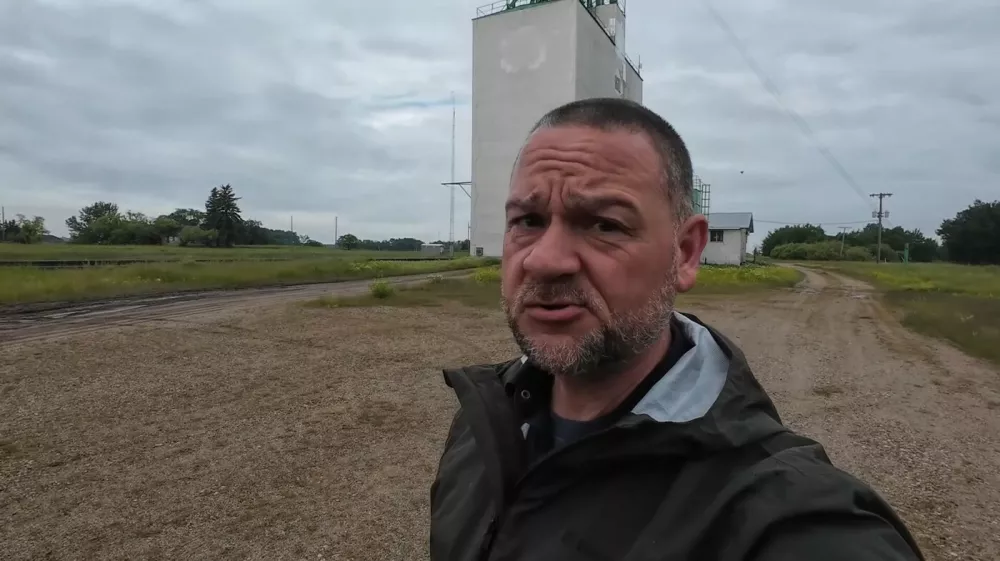
Garry Workman je eden redkih prebivalcev, ki vztrajajo. Foto: Profimedia

Solsgirth leži ob cesti Yellowhead Highway, južno od narodnega parka Riding Mountain. Na prvi pogled bi ga lahko zamenjali za prizorišče kakšnega postapokaliptičnega filma. Zapuščene hiše počasi prerašča rastlinje, nekdanji vrtovi so se spremenili v goščavo, skozi okna praznih stavb pa je mogoče uzreti ostanke nekdanjega življenja.

Ko se je preselila železnica, se je preselilo kar celo mesto

Zgodovina Solsgirtha je pravzaprav precej nenavadna. Naselje je sprva stalo približno deset kilometrov severneje in se je imenovalo Toddburn. Ko so načrtovalci železnice spremenili predvideno traso, so se prebivalci odločili, da bodo sledili železniškim tirom. Namesto da bi čakali na razvoj dogodkov, so svoje naselje preprosto preselili bližje novi progi.

Fotograf Dave Conlon, ki je dokumentiral zapuščeni kraj, je zgodbo opisal kot svojevrstno selitev celotnega mesta. Železnica je bila namreč življenjska žila skupnosti, saj je omogočala prevoz kmetijskih pridelkov, trgovanje in povezavo z drugimi kraji.

Toda tisto, kar je naselju nekoč prineslo razvoj, ga ni moglo obvarovati pred postopnim propadanjem. Z leti so trgovine zapirale vrata, družine so se odseljevale, hiše pa so ostajale prazne.

Story from Jam Press (Eerie Ghost Town)Pictured: Slide 4: A house full of forgotten possessions.GALLERY: Inside eerie 'ghost town' where just THREE families remain and church was sold at 50pEerie pictures reveal a near-abandoned ghost town with desolate churches and empty homes littered with once-prized belongings.The haunting images show deserted houses, overgrown gardens and a church where a calendar remains stuck on September 2002.Photographer Dave Conlon, known online as Freaktography, captured the forgotten settlement of Solsgirth in Manitoba, Canada.The village was once a thriving farming community, boasting shops, a railway station, grain elevators and two churches.But its population gradually dwindled as residents moved away, with just three households reportedly remaining in 2021.Remarkably, Solsgirth was originally located around six miles north of its present position.Known as Toddburn, the settlement relocated after the railway changed its planned route."The whole town picked up and followed it," Dave told Jam Press.Among its most striking surviving buildings are St Stephen's Anglican Church, built in 1906, and Holy Ghost Ukrainian Catholic Church, which was converted from a former schoolhouse.The latter's distinctive domes were handcrafted by Michael "Mike" Swistun, a local carpenter who once performed as the world's strongest man with a circus.Both churches held their final services in 2002, just four months apart."For 50 years, two faiths worshipped a stone's throw apart," Dave said.St Stephen's was subsequently sold to a regional museum for just one Canadian dollar, although plans to relocate the building never materialised.Its wooden pews, pulpit and religious books can still be seen inside.The photographs offer a fascinating glimpse into a once-bustling community that has almost vanished from the Canadian countryside.ENDSHidden among overgrown grass in the Canadian province of Manitoba is Solsgirth, a once-bustling railway settlement that has almost disappeared.The village was formerly home to shops, a railway station, grain elevators and two churches.But as families moved away and local businesses disappeared, the community gradually faded.By 2021, one longtime resident reported that just three households remained.Solsgirth has an unusual history, because the entire settlement effectively changed location.Originally known as Toddburn, the community started around six miles north of its present position.But when railway planners changed the route of the tracks, residents followed the new line.This towering grain elevator is a reminder of the railway's importance to the farming community, which once depended on trains to transport its crops.Today, some of Solsgirth's old houses are barely visible behind trees and waist-high grass.The village's decline reflects a wider transformation of Canada's farming communities, as agricultural operations grew larger and families increasingly travelled to bigger towns.Solsgirth once had its own shops and school, but many of those everyday services eventually vanished.Inside one neglected property, an extraordinary collection of belongings has been left scattered across the floor.An old television sits above a washing machine, while framed pictures, household objects and assorted clutter fill the room.Another room contains a colourful mountain of baseball caps, many still carrying recognisable logos.Among them are hats advertising businesses, sports and beer brands, including a bright red Lucky Lager cap.A smiling ceramic teddy bear, a little dog figurine and other decorative ornaments remain perched together inside one of the properties.It's a far cry from the thriving community remembered by older residents, when Solsgirth was a busy stop along the railway.Elsewhere, the passage of time has been considerably less kind.Photographs reveal peeling walls, damaged ceilings and debris scattered across the floor of another neglected room.Insulation hangs from above, while an opening in the wall offers a view into an adjoining kitchen.One of Solsgirth's most distinctive buildings is the former Holy Ghost Ukrainian Catholic Church, complete with three cross-topped domes.The domes were handcrafted by local carpenter Mike Swistun, who had toured with the Ringling Brothers and Barnum & Bailey Circus in 1923.During his performing career, he was billed as 'The Strongest Man in the World'.The church had an entirely different purpose before becoming a place of worship.Its building was originally the Burdette School, a one-room country schoolhouse that closed in December 1958.It was subsequently moved into Solsgirth and converted for the area's Ukrainian Catholic community.Inside the former church, a bright blue curved ceiling contrasts with pale yellow walls and polished wooden floorboards.The Ukrainian Catholic congregation dates back to 1950, although the building's conversion from a schoolhouse happened later.Its final religious service took place on 16 June 2002, bringing more than half a century of local worship to an end.After the congregation closed in 2002, there were hopes the building could be preserved by a regional museum.Instead, it was eventually sold to private buyers who planned to turn it into a home.Historical records indicate the proposed conversion had not been completed when the site was inspected in 2016.Just a short distance away stands St Stephen's Anglican Church, another survivor of Solsgirth's early years.Built in 1906, it was created after a disagreement over whether an older church outside the village should be moved closer to residents.Rather than relocate the existing building, parishioners established a second church.Rows of wooden pews still line the interior of St Stephen's, facing an altar beneath a stained-glass window.The church held its final service on 13 October 2002, when around 50 current and former parishioners reportedly gathered to say goodbye.The occasion also marked the formal end of the building's religious status that served the community for 96 years.A wooden pulpit still stands inside St Stephen's, overlooking the pews where generations of villagers once gathered.Among the objects photographed inside St Stephen's is an old Oxford Holy Bible, resting on a red-covered surface.After its closure, the building was sold to the Prairie Mountain Regional Museum for just 50p (Canadian Dollar).Other religious items remain inside the former Anglican church, including an open book and a picture depicting a biblical scene.One particularly poignant discovery is a calendar still displaying September 2002.Just one month later, St Stephen's held its final service.On 13 October, worshippers gathered for a Thanksgiving Eucharist before the church was formally deconsecrated.Outside St Stephen's, a stone memorial honours the pioneers who built the church in 1906.The monument was dedicated in October 2002, when the congregation gathered for its final service.Although plans were made to move the building to a museum, it remains on its original site.ENDSEDITOR'S NOTE: Exclusive Licence: An exclusive licence has been obtained directly from the verified copyright holder. Jam Press holds exclusive distribution rights for the agreed content within the terms of the contributor agreement.,Image: 1144995928, License: Rights-managed, Restrictions: EDITOR'S NOTE: Exclusive Licence: An exclusive licence has been obtained directly from the verified copyright holder. Jam Press holds exclusive distribution rights for the agreed content within the terms of the contributor agreement., Model Release: no

Z leti so trgovine zapirale vrata, družine so se odseljevale, hiše pa so ostajale prazne. Foto: Profimedia

V nekaterih stavbah so še vedno osebni predmeti nekdanjih stanovalcev. Med kupi zapuščenih stvari je mogoče najti star televizor, postavljen na zaboj, in celo pisano zbirko bejzbolskih čepic. Kot da bi prebivalci nekega dne odšli po opravkih in se preprosto nikoli več vrnili.

Dve cerkvi, zadnje maše in prodaja 

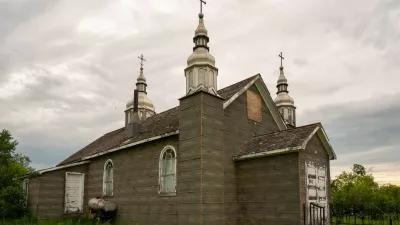
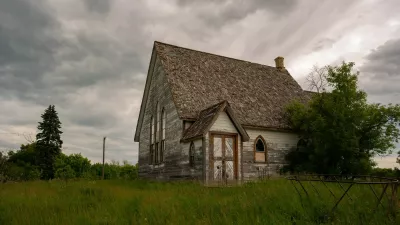
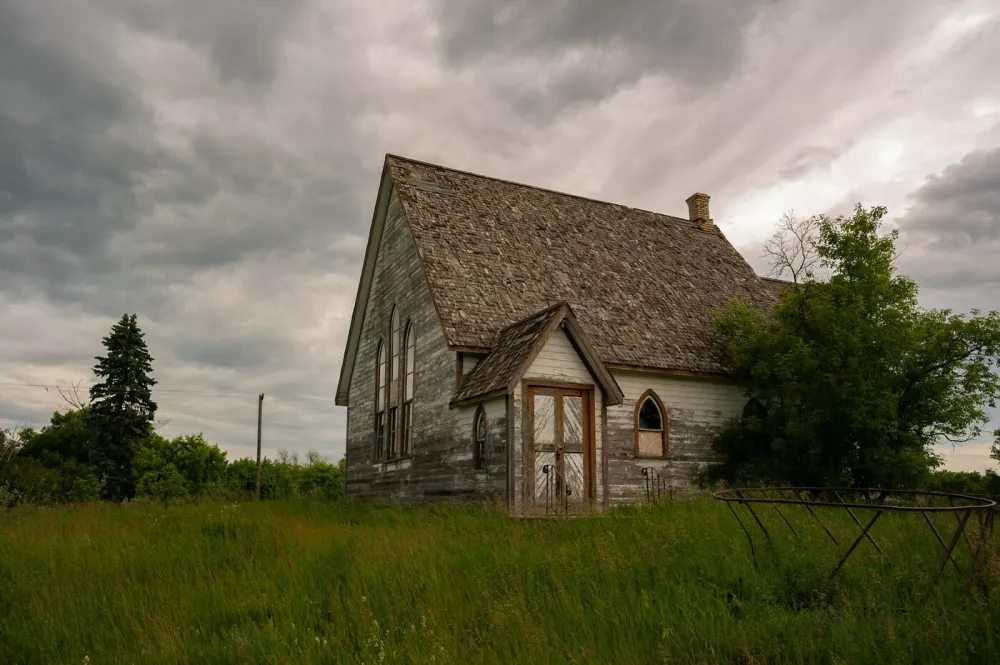
Posebno poglavje zgodbe Solsgirtha predstavljata njegovi cerkvi. Anglikanska cerkev svetega Štefana je bila zgrajena leta 1906, v njej pa so ostale lesene klopi, verske knjige in stara oxfordska Biblija. Na enem od koledarjev je še vedno september 2002, kot da bi se čas ustavil prav takrat, ko je skupnost izgubila še enega od svojih pomembnih prostorov srečevanja.

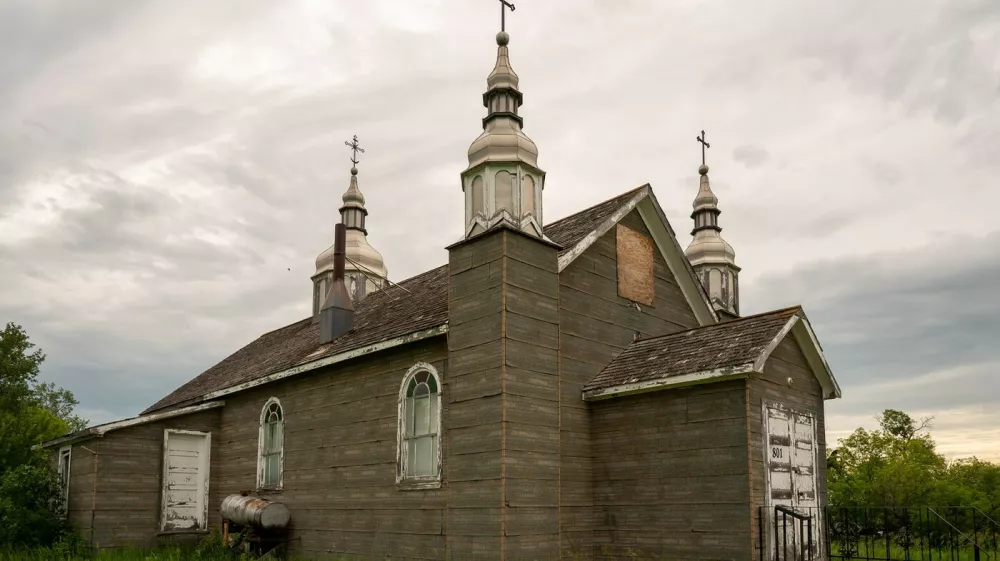
Druga, ukrajinska grškokatoliška cerkev Svetega duha, ima še zanimivejšo zgodovino. Nastala je s preureditvijo nekdanje šole, ki so jo zaprli leta 1958. Njene značilne kupole je ročno izdelal domači mizar Michael Swistun - Mike, ki je imel za seboj nenavadno življenjsko pot. Nekoč je namreč nastopal v cirkusu kot najmočnejši človek na svetu.
Story from Jam Press (Eerie Ghost Town)Pictured: Slide 12: The other church with a remarkable history.GALLERY: Inside eerie 'ghost town' where just THREE families remain and church was sold at 50pEerie pictures reveal a near-abandoned ghost town with desolate churches and empty homes littered with once-prized belongings.The haunting images show deserted houses, overgrown gardens and a church where a calendar remains stuck on September 2002.Photographer Dave Conlon, known online as Freaktography, captured the forgotten settlement of Solsgirth in Manitoba, Canada.The village was once a thriving farming community, boasting shops, a railway station, grain elevators and two churches.But its population gradually dwindled as residents moved away, with just three households reportedly remaining in 2021.Remarkably, Solsgirth was originally located around six miles north of its present position.Known as Toddburn, the settlement relocated after the railway changed its planned route."The whole town picked up and followed it," Dave told Jam Press.Among its most striking surviving buildings are St Stephen's Anglican Church, built in 1906, and Holy Ghost Ukrainian Catholic Church, which was converted from a former schoolhouse.The latter's distinctive domes were handcrafted by Michael "Mike" Swistun, a local carpenter who once performed as the world's strongest man with a circus.Both churches held their final services in 2002, just four months apart."For 50 years, two faiths worshipped a stone's throw apart," Dave said.St Stephen's was subsequently sold to a regional museum for just one Canadian dollar, although plans to relocate the building never materialised.Its wooden pews, pulpit and religious books can still be seen inside.The photographs offer a fascinating glimpse into a once-bustling community that has almost vanished from the Canadian countryside.ENDSHidden among overgrown grass in the Canadian province of Manitoba is Solsgirth, a once-bustling railway settlement that has almost disappeared.The village was formerly home to shops, a railway station, grain elevators and two churches.But as families moved away and local businesses disappeared, the community gradually faded.By 2021, one longtime resident reported that just three households remained.Solsgirth has an unusual history, because the entire settlement effectively changed location.Originally known as Toddburn, the community started around six miles north of its present position.But when railway planners changed the route of the tracks, residents followed the new line.This towering grain elevator is a reminder of the railway's importance to the farming community, which once depended on trains to transport its crops.Today, some of Solsgirth's old houses are barely visible behind trees and waist-high grass.The village's decline reflects a wider transformation of Canada's farming communities, as agricultural operations grew larger and families increasingly travelled to bigger towns.Solsgirth once had its own shops and school, but many of those everyday services eventually vanished.Inside one neglected property, an extraordinary collection of belongings has been left scattered across the floor.An old television sits above a washing machine, while framed pictures, household objects and assorted clutter fill the room.Another room contains a colourful mountain of baseball caps, many still carrying recognisable logos.Among them are hats advertising businesses, sports and beer brands, including a bright red Lucky Lager cap.A smiling ceramic teddy bear, a little dog figurine and other decorative ornaments remain perched together inside one of the properties.It's a far cry from the thriving community remembered by older residents, when Solsgirth was a busy stop along the railway.Elsewhere, the passage of time has been considerably less kind.Photographs reveal peeling walls, damaged ceilings and debris scattered across the floor of another neglected room.Insulation hangs from above, while an opening in the wall offers a view into an adjoining kitchen.One of Solsgirth's most distinctive buildings is the former Holy Ghost Ukrainian Catholic Church, complete with three cross-topped domes.The domes were handcrafted by local carpenter Mike Swistun, who had toured with the Ringling Brothers and Barnum & Bailey Circus in 1923.During his performing career, he was billed as 'The Strongest Man in the World'.The church had an entirely different purpose before becoming a place of worship.Its building was originally the Burdette School, a one-room country schoolhouse that closed in December 1958.It was subsequently moved into Solsgirth and converted for the area's Ukrainian Catholic community.Inside the former church, a bright blue curved ceiling contrasts with pale yellow walls and polished wooden floorboards.The Ukrainian Catholic congregation dates back to 1950, although the building's conversion from a schoolhouse happened later.Its final religious service took place on 16 June 2002, bringing more than half a century of local worship to an end.After the congregation closed in 2002, there were hopes the building could be preserved by a regional museum.Instead, it was eventually sold to private buyers who planned to turn it into a home.Historical records indicate the proposed conversion had not been completed when the site was inspected in 2016.Just a short distance away stands St Stephen's Anglican Church, another survivor of Solsgirth's early years.Built in 1906, it was created after a disagreement over whether an older church outside the village should be moved closer to residents.Rather than relocate the existing building, parishioners established a second church.Rows of wooden pews still line the interior of St Stephen's, facing an altar beneath a stained-glass window.The church held its final service on 13 October 2002, when around 50 current and former parishioners reportedly gathered to say goodbye.The occasion also marked the formal end of the building's religious status that served the community for 96 years.A wooden pulpit still stands inside St Stephen's, overlooking the pews where generations of villagers once gathered.Among the objects photographed inside St Stephen's is an old Oxford Holy Bible, resting on a red-covered surface.After its closure, the building was sold to the Prairie Mountain Regional Museum for just 50p (Canadian Dollar).Other religious items remain inside the former Anglican church, including an open book and a picture depicting a biblical scene.One particularly poignant discovery is a calendar still displaying September 2002.Just one month later, St Stephen's held its final service.On 13 October, worshippers gathered for a Thanksgiving Eucharist before the church was formally deconsecrated.Outside St Stephen's, a stone memorial honours the pioneers who built the church in 1906.The monument was dedicated in October 2002, when the congregation gathered for its final service.Although plans were made to move the building to a museum, it remains on its original site.ENDSEDITOR'S NOTE: Exclusive Licence: An exclusive licence has been obtained directly from the verified copyright holder. Jam Press holds exclusive distribution rights for the agreed content within the terms of the contributor agreement.,Image: 1144996562, License: Rights-managed, Restrictions: EDITOR'S NOTE: Exclusive Licence: An exclusive licence has been obtained directly from the verified copyright holder. Jam Press holds exclusive distribution rights for the agreed content within the terms of the contributor agreement., Model Release: no

Zgodovina Solsgirtha je pravzaprav precej nenavadna. Foto: Profimedia

Obe cerkvi sta zadnji bogoslužji doživeli leta 2002, v razmiku komaj štirih mesecev. Od njiju se je poslovilo približno 50 sedanjih in nekdanjih župljanov. Anglikansko cerkev so pozneje prodali regionalnemu muzeju Prairie Mountain za vsega en kanadski dolar. Načrtovali so, da jo bodo preselili in tako ohranili kot del lokalne dediščine, vendar načrt ni bil nikoli uresničen. Drugo cerkev so kupili zasebniki, ki so jo želeli preurediti v družinsko hišo, a prenova ob ogledu leta 2016 še ni bila dokončana.

Danes Solsgirth ostaja nenavaden spomenik nekdanjemu življenju na kanadskem podeželju. Hiše počasi izginjajo za drevesi, cerkvene klopi samevajo, železniška preteklost pa živi le še v spominih redkih prebivalcev in na fotografijah.


Priporočamo